

Tunde gave $60 to the spring appeal. He got a receipt within a minute. Then nothing.
Six months later the autumn appeal arrived in his inbox. It was the first time the charity had written to him since the receipt. It asked him for money.
Tunde did not give again. He did not decide against it. He just felt like a stranger being asked for a favour.
What breaks
Most teams treat a first gift as the end of a campaign. The money is counted, the receipt goes out, and the team moves on to the next appeal.
For the donor, the first gift is the start. They took a small risk. They want to know what happened to it, and whether anyone noticed.
The gap between the first gift and the next message is where donors drift away.
A plan for the first 30 days
- Day 0: a receipt that sounds human. Say what the gift does. "Your $60 pays for six tutoring sessions." Not "Thank you for your contribution."
- Day 2: a personal thank-you. From someone who knows the work: a short note or a two-minute call. It does not need to be long. It needs to be real.
- Day 10: a story, with no ask. Show one thing that happened because of the campaign.
- Day 21: an invitation to see the work. A visit, an open evening, a volunteer morning. Seeing it matters more than reading about it.
- Day 30: a question, not a request. "What made you decide to give?" The answer tells you what to say next.
The next ask comes after the donor has heard from you at least three times.
What to avoid
- Do not put a first-time donor on the same list as a ten-year donor and send them the same message.
- Do not send the thank-you only after the campaign closes. By then it is weeks late.
Try this week
Look at the people who gave for the first time last year. How many gave again? That is your baseline. Write it down. Then choose the next five first-time donors and give each of them the plan above. In three months, compare.
How Cotara helps
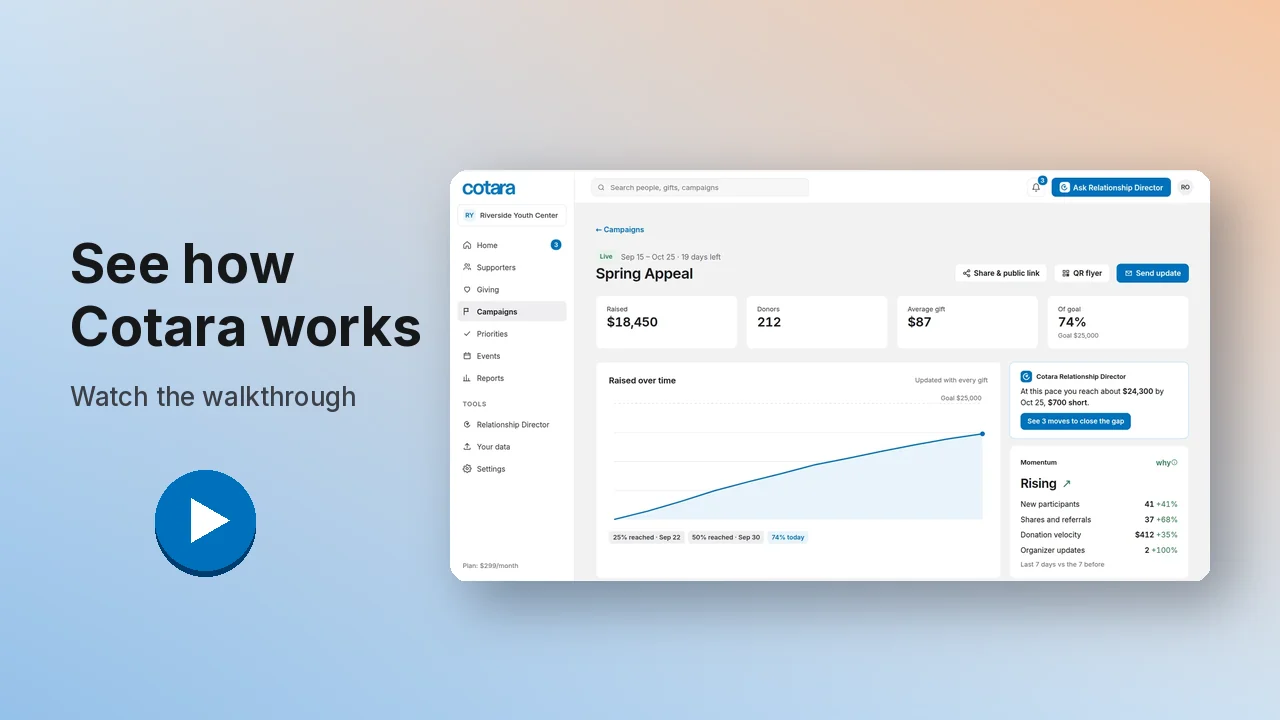
Cotara spots first-time donors who have not given again. It drafts a short welcome series for you: emails and a call script. You edit the words and send them from your own email, on your own schedule.
Common questions
What counts as a second gift?
Any gift from the same person after their first one, in any campaign. Count it over a fixed window, for example twelve months, so you can compare year to year.
Is a phone call too much for a small first gift?
No. A two-minute thank-you call to a new donor is one of the best uses of staff time. Start with the ten most recent donors and see how it feels.
When is it right to ask again?
After the donor has heard from you at least three times without an ask. The exact gap depends on your calendar. The rule is to give before you ask.
Tunde is a composite example. Names and details are illustrative.