

Why do we assume the best way to raise money for a good cause is to ask people to donate?
What if we gave them something to take part in instead?
In December 2024 we tried a version of that idea, as an experiment. At a Christmas carol evening with RCCG Rehoboth Place, a church in our community, we held a community auction for the Kennebecasis Valley Food Basket in New Brunswick, Canada.
People brought things they once loved but no longer needed. Others bid on them. Items that would have sat in a cupboard became a way to feed neighbors.
What happened
- 89 donated items went up for auction.
- 60 people placed bids.
- In one evening, the auction raised nearly CAD $1,700.
- RCCG Rehoboth Place matched it, bringing the total to about CAD $3,400.
- The next day, the money was handed to the food bank.
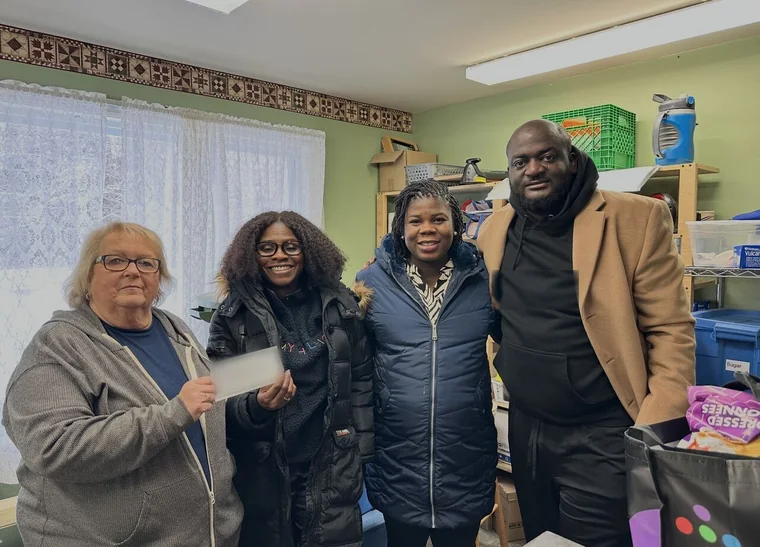
Less than 48 hours from first bid to handover. But the amount isn’t what interests me most.
Not everyone gave the same way
Someone gave an item. Someone else paid for it. Others set up the room or ran the bidding. The church matched what the community raised.
The person who donated an item may not have spent a cent. Yet without that item, nobody had anything to bid on.
The contribution nobody recorded
Some people that evening didn’t bid much themselves. They brought someone: a neighbor, a coworker, a friend. Some of those guests went on to win several items.
The record shows the guest’s bids. It doesn’t show the invitation. The person who asked them to come doesn’t appear anywhere.
We can’t say the invitation caused those bids. What we can say is that we had no way to see it, because nothing we kept was looking for it.
Sixty people bid. Far fewer will ever appear in a record as a “donor”. Fewer still will be remembered for who they brought. (We wrote more about this in what happens when a supporter brings someone else.)
A person’s contribution to a cause isn’t always the money they personally give.
What knowing your supporters means
Most donor records answer one question: who paid, and how much? That evening asked a different one: who made this possible?
Knowing your supporters means seeing both. What each person gave, and what they made possible: the item they donated, the hour they volunteered, the friend they brought.
What I’d measure next time
- How many people donated items, and how many of them also bid.
- How many bidders were new to the church or the food bank.
- Who invited whom, recorded with permission. (On why who answers matters, see ask who you’re listening to.)
- When people learned about the match, so we can see whether it changed bidding.
- What happened afterward: did anyone volunteer, come to another event or bring someone new?
We know how to count donations. I want to understand what brings people together to make them happen.
A real community fundraiser held in December 2024 with RCCG Rehoboth Place for the Kennebecasis Valley Food Basket. Amounts and counts are approximate. It is an observation, not a controlled experiment, and doesn’t show that any activity caused more giving.